
VanSpot Finder guides
All campervan and motorhome guides
Campervan water system in freezing weather: protect, drain and restart it
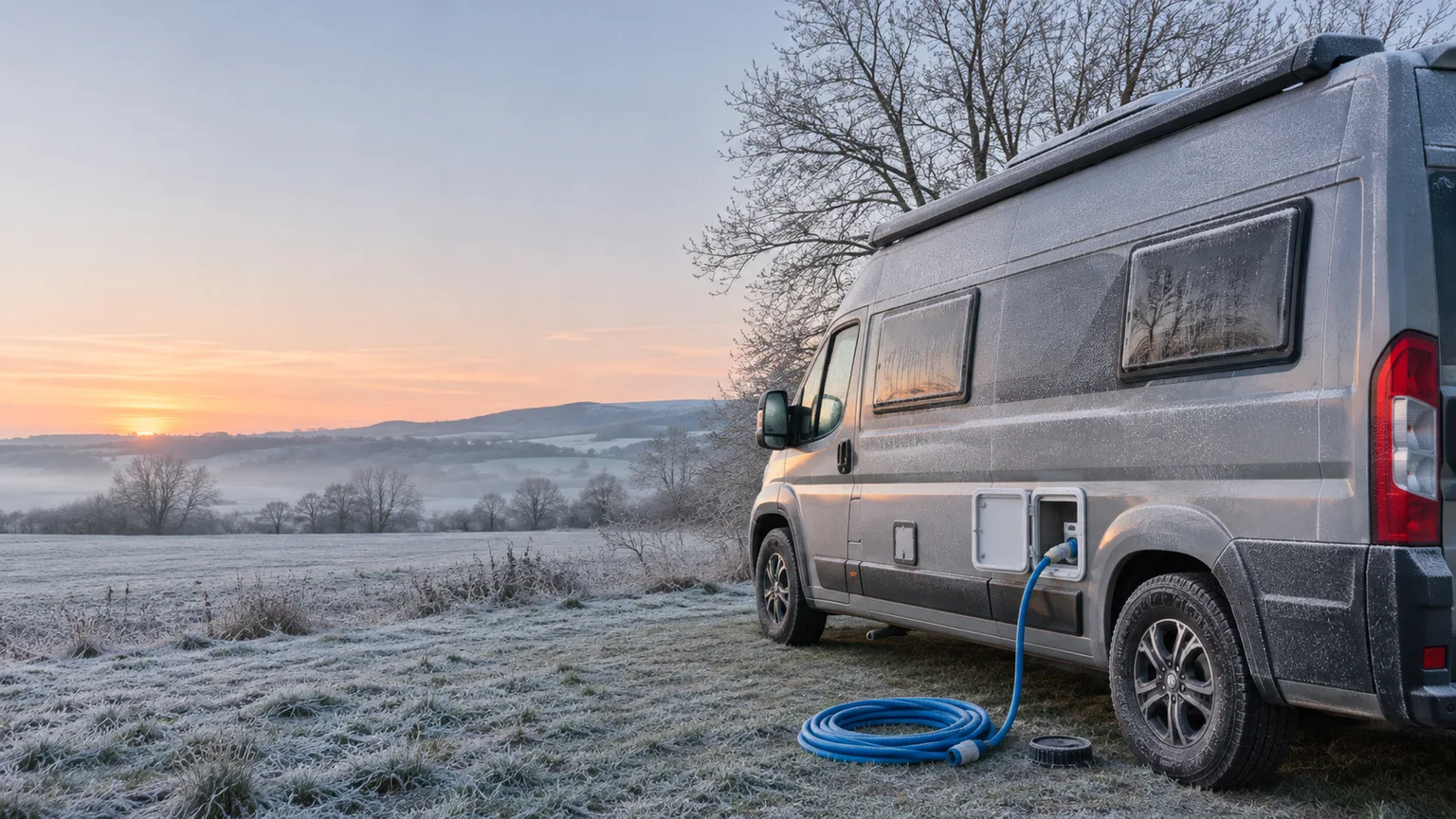
Decide before the cold: keep it frost-free or drain it
Water expands as it freezes. In a campervan or motorhome, even a small amount left in a pump, filter, valve, elbow or water heater can damage the system. The right strategy depends on the vehicle, forecast temperature and whether heating is genuinely maintained.
Choose one coherent strategy. If the vehicle is occupied, keep the relevant equipment within its operating range and monitor it. If it is parked, unheated or exposed to a heating failure, prepare a complete drain following each appliance manual.
- Occupied vehicle: continuous heating, energy and ventilation; also check pipes near walls and external tanks.
- Unattended vehicle: do not rely on residual heat; draining is the most robust strategy.
- Uncertain weather or installation: follow the most cautious procedure specified by the equipment manufacturers.
Map the whole system, not just the tank
Before opening a valve, follow the water path and identify low points. Photograph normal valve positions and list components with their own procedure.
- Fresh-water tank, filler, vent and drain valve.
- Pump, filter, accumulator and fittings under furniture or near a cold wall.
- Water heater or combined heater, including its safety/drain valve and specific instructions.
- Taps, shower and outside shower: leave mixers in the position required for draining.
- Grey-water tank, traps, outlet pipe and external valve.
- Toilet flush tank, cassette and the components named in the model manual.
While in use: protect the parts that are really exposed
A warm living area does not guarantee that every pipe stays frost-free. Warm air must reach technical lockers, while an external tank may remain exposed. Monitor temperatures and follow manufacturer limits rather than inventing a universal threshold.
- Maintain enough energy for heating and plan for gas, fuel or battery loss.
- Never block permanent ventilation; use only compatible insulation without enclosing equipment that needs air.
- Keep grey-water outlets and valves clean and accessible; never force a frozen valve.
- Check drinking water and disposal separately at each stop: an open site does not guarantee a working tap during frost.
To plan stops, also use our guide to services open in winter.
Drain fully, appliance by appliance
Park level and let the system cool, then switch off the pump and energy sources as the manuals require. Open the fresh-water drain and low points, then open taps in the recommended position to admit air. Drain the water heater, grey tank and toilet separately.
- Use the exact water-heater manual: controls and valve positions vary by model.
- Run the pump briefly only if its manual instructs you to; do not run it dry without manufacturer approval.
- Remove or empty filters and detachable accessories intended for this, then leave valves in their prescribed storage position.
- Never add automotive antifreeze to a drinking-water system. Do not use compressed air at a guessed pressure; limits depend on the installation.
- Empty grey water and the cassette only at an authorised facility, before contents or valves freeze.
On some Truma systems, FrostControl opens automatically at about 3°C and can only be closed above about 7°C. This protects the connected water heater, not the entire water network. Dometic and Thetford also publish appliance-specific sequences, so the model manual takes priority.
What a frost valve does not prove
An automatic valve serves a specific appliance or branch. It may not drain the fresh tank, pump, taps, traps, grey tank or toilet.
- Do not assume that an indicator, open valve or empty tank proves the complete system is dry.
- Do not close a valve that opened because of cold until the compartment is warm and you understand the cause.
- Never bypass a safety device to retain water; restore a safe temperature or drain instead.
Refill without hiding a leak
When temperatures are safe, inspect hoses, clamps, tanks, filter, pump, heater and valves. Close drains in the manual’s order, fill gradually with suitable water and bleed air one tap at a time.
- Begin with a small volume and observe fittings before filling completely.
- Prime the pump according to its manual; stop if it cannot build pressure or keeps running.
- Test cold water, then hot water, shower and toilet, and inspect lockers during and after the test.
- If there is a leak, abnormal noise or a valve that will not stay closed, stop the pump and have the component checked.
Before the next fill, use our method to check a drinking-water point.
Prepare a fallback with VanSpot Finder
In VanSpot Finder, locate motorhome areas, campsites, water and disposal options around your stop in advance. The app helps compare locations and prepare an alternative; it does not certify potability, opening or real-time frost status.
This guide is edited by VanSpot Finder from the cited manufacturer manuals, checked on 12 November 2026. It does not replace your model manual or a professional diagnosis. Record your own valve sequence and keep it in the vehicle.
Frequently asked questions about water systems in freezing weather
Should the system be drained whenever frost is forecast?
If the vehicle or part of the system cannot stay within the manufacturer’s permitted range, drain it before frost according to the manuals. A heated cabin does not automatically protect an external tank or pipe.
Does FrostControl protect the complete water system?
No. It drains the connected water heater under the conditions defined by Truma. The tank, pump, pipes, grey water and toilet need separate checks.
Can automotive antifreeze be used in the fresh-water tank?
No. Do not put automotive antifreeze in a drinking-water circuit. Follow the approved winterising and hygiene products, if any, specified for your exact installation.