
Safety and preparation
All campervan and motorhome guides
Campervan and motorhome weight: how do you check payload before departure?
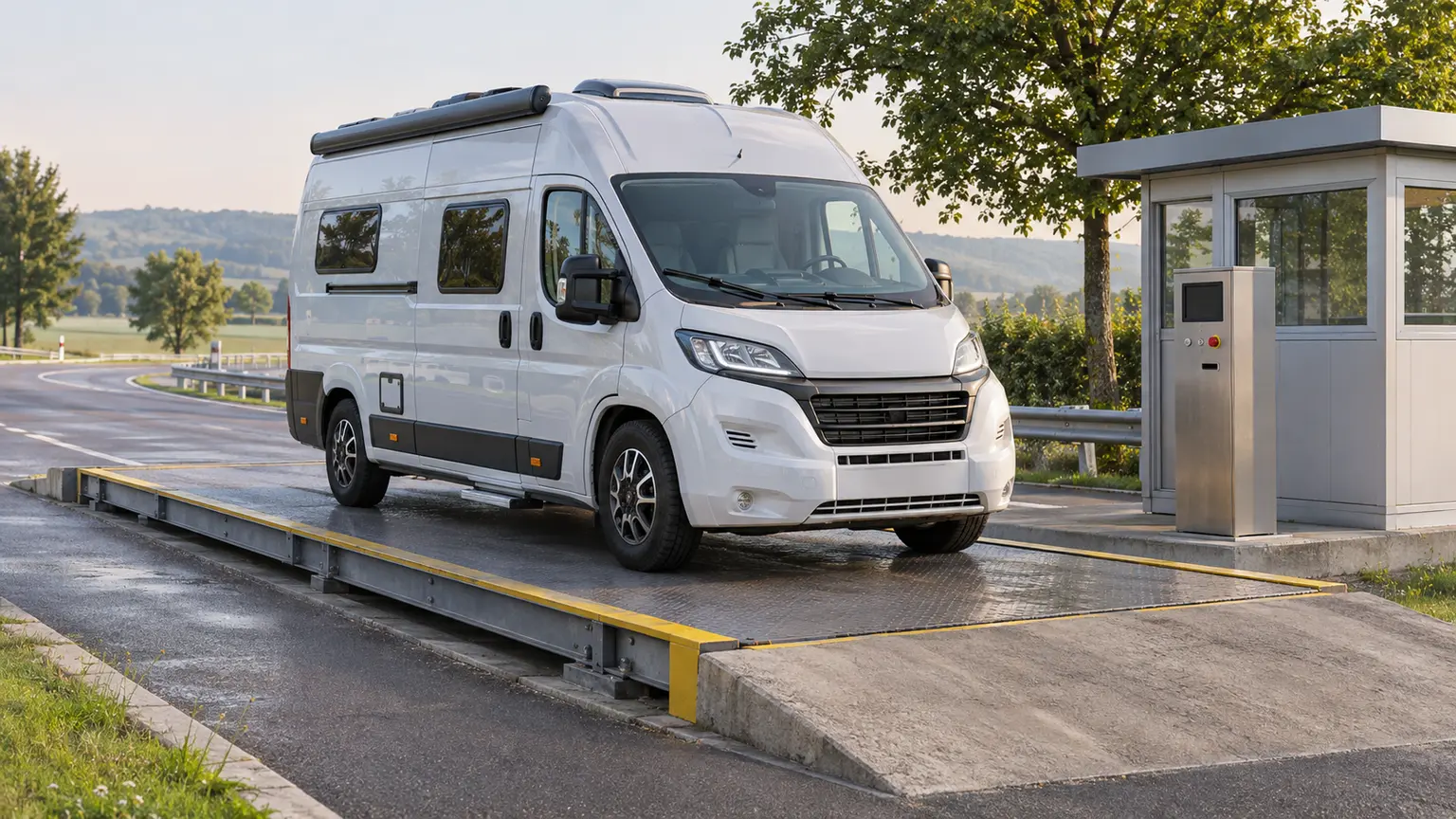
The short answer: two kinds of limit must be respected
A vehicle ready to travel must remain below its maximum authorised mass and below the limit for each axle. Staying below the total does not offset an overloaded axle. Use the values that apply to the vehicle and country: the manufacturer or converter plate, registration document and local rules.
Theoretical payload is the difference between maximum authorised mass and unladen mass under the relevant administrative definition. It does not show what remains after adding an awning, batteries, solar panels or a bike rack. Weigh the vehicle in travel configuration to find the real margin.
Record four figures before loading
- The vehicle maximum authorised mass.
- The maximum load for the front axle.
- The maximum load for the rear axle.
- The maximum train weight if you tow a trailer.
If plates or documents appear to conflict, do not choose the most favourable figure. Ask the manufacturer, converter or competent authority which limit applies to your exact vehicle.
Weigh the vehicle in its real travel configuration
Prepare it as for departure: driver and passengers, fuel, planned water level, gas cylinders, food, clothes, bikes, pets, removable equipment and any trailer. Record tank levels on the day.
- Use a suitable weighbridge and follow the operator’s instructions. Ask for the total and, where possible, separate front and rear axle readings.
- Keep the ticket and describe the exact configuration. A reading without passengers, bikes or water is not directly comparable with a loaded departure.
- After permanent equipment or a major conversion is added, weigh again instead of relying only on the weight printed on an invoice.
Calculate the three margins
On one record calculate: total margin = total limit − measured total; front margin = front limit − measured front axle; rear margin = rear limit − measured rear axle. All three must remain positive. Then retain a practical allowance for water, shopping, extra passengers or wet equipment.
- Positive total, negative rear axle: the rear is still overloaded. Remove or move weight, then reweigh.
- Negative total, positive axles: remove weight; good distribution does not make the total excess acceptable.
- Three small positive margins: list variable loads before deciding. Water or shopping may use the margin.
- Unknown axle reading: do not infer compliance from total weight alone. Find a weighbridge that can check it.
Distribute and secure the load without moving the problem
Place heavy items as low as possible, in storage designed to retain them and, where the layout allows, near the area between the axles. Weight far behind the rear axle can add substantial load to it. Reweighing is the reliable check after redistribution.
- Secure bikes, boxes, cylinders and equipment with the intended anchor points and restraints.
- An item that stays put while parked can still be dangerous under heavy braking.
- Do not assume that moving one item makes both axle limits compliant: measure again.
Keep a repeatable weighbridge record
- Date, place and scale type; measured total, front and rear.
- Limits from the plate and vehicle document, including units.
- Occupants, fuel level, estimated water, gas, bikes and trailer.
- Equipment added since the last reading and temporary loads missing that day.
- The three calculated margins and the action chosen: remove, move, limit water or reweigh.
This record is not a permanent certificate of compliance. It makes the decision repeatable and avoids confusing a brochure’s unladen figure with the real vehicle you drive.
Connect the weight check with route planning
Once loading is checked, record height, width, length and authorised mass in your travel notes. The guide to planning a campervan road trip explains how to check route critical points. VanSpot Finder can then help compare stops and nearby services; confirm access restrictions locally.
For a first departure, use the first weekend checklist and plan water with the drinking-water guide. Water is part of the load: one litre is about one kilogram, before the tank and pipework.
Sources and limits of this guide
This guide is edited by VanSpot Finder from sources consulted on 5 November 2026. Terms, documents and thresholds vary by country, vehicle category and licence. Use your vehicle-specific limits and the official rules for the journey.
Frequently asked questions about motorhome payload
Can a motorhome be legal on total weight but overloaded on one axle?
Yes. Total mass and each axle limit are separate constraints. Check all of them.
Should I weigh with water and passengers on board?
Weigh in the configuration you plan to use and record tank levels and occupants. Otherwise add every missing variable conservatively before deciding.
Is brochure payload the same as my remaining payload?
Not necessarily. Added equipment and the administrative definition of unladen mass can change the real margin. A ready-to-travel weighbridge reading is more useful.
Does VanSpot Finder calculate payload?
No. The app helps find and compare stops and services. Reading the plates, weighing and respecting limits remain the driver’s responsibility.