
Winter and onboard safety
Campervan and motorhome heating: prevent carbon monoxide poisoning
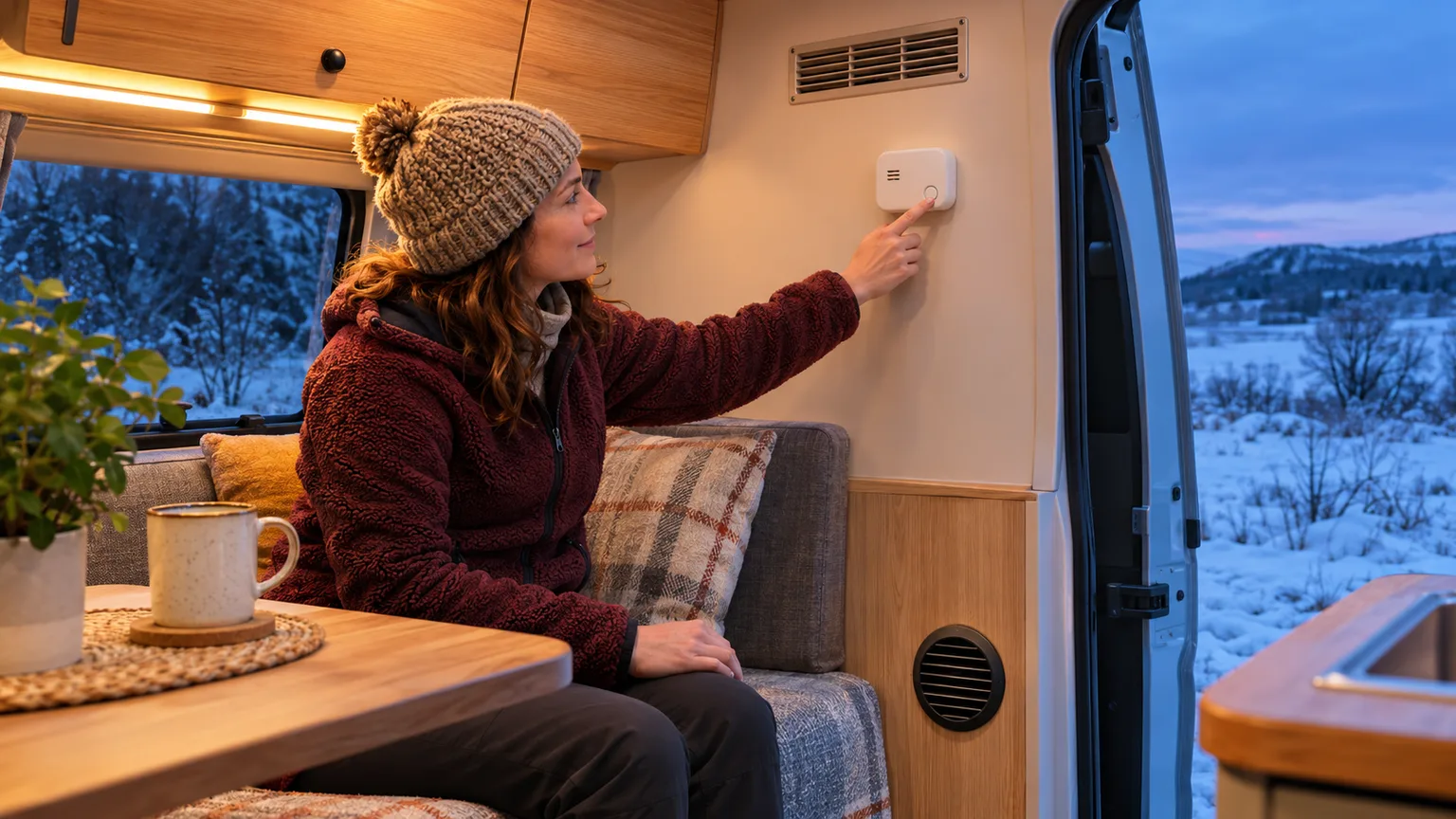
The short answer: four checks before switching on
In a small space, use only a heater designed for the vehicle, installed and serviced according to its instructions. Before switching it on, check four separate items: the appliance, its exhaust to the outside, permanent vents and a working carbon monoxide alarm. If any item cannot be verified, do not run the heater while you sleep.
Carbon monoxide, or CO, is an invisible, odourless gas produced by incomplete combustion. An alarm can warn you, but it cannot compensate for poor installation, a blocked flue or an obstructed vent. This guide is a decision method; it does not replace the appliance manual or inspection by a qualified professional.
The check before the first cold night
Do this check in daylight, before heating becomes essential. You should be able to answer every line clearly:
- Appliance: the model is intended for use in a habitable vehicle and its fuel matches the manual.
- Installation: fixings, ducts, connections and guards have not been altered since the last compliant inspection.
- Exhaust: the outside outlet is visible and clear of snow, mud, leaves, luggage and added equipment.
- Vents: permanent air inlets and outlets are open; no foam, blanket or stored item covers them.
- Alarm: it is suitable for the vehicle, within its service life, installed where its manual specifies and passes its test.
- Exit: the door opens, keys remain accessible and every occupant can leave without searching for a phone or shoes.
- Alternative: you have decided where to go if the heater, alarm or power supply becomes unavailable overnight.
Do not turn a fault into an improvised repair. An unusual smell, soot, an abnormal flame, repeated shutdowns or unexplained overheating require you to stop the appliance and have the installation checked.
What must never be used to heat the campervan
A hob, stove or gas oven is not a heater. A barbecue, brazier and generator stay outside, away from doors, windows and air intakes. The French Ministry of Health specifically lists cooking appliances, braziers and generators among the equipment not to use for heating or in an enclosed space.
- Do not leave the engine running for heat in a garage, shelter or any other enclosed space.
- Never bring a still-warm barbecue into the vehicle or awning: it may keep producing CO without a visible flame.
- Do not use a camping heater that its manufacturer has not designed for an enclosed habitable vehicle.
- Do not dry clothes on the appliance or in front of a grille needed for its operation.
Ventilation, exhaust and weather: check three different paths
1. Air for the occupants
Keep permanent vents clear even in very cold weather. Briefly opening a window may renew the air, but never justifies blocking a grille specified by the vehicle maker.
2. Air needed by the appliance
Follow the heater manual: depending on its design, combustion air and heated air do not use the same paths. Do not add an improvised cover, hose or reducer.
3. Gases discharged outside
Inspect the outside outlet after a dirty journey, snowfall or storing equipment. A clear exhaust yesterday does not prove it is clear tonight. If you cannot identify the flue location or condition, have the installation checked before use.
CO alarm: choosing it, testing it and knowing its limit
For a leisure vehicle, look for the manufacturer's stated conformity and follow its instructions. The French Ministry of Health cites European standard NF EN 50291 for CO alarms; UK fire services recommend EN 50291-2, intended in particular for caravans and leisure vehicles.
- Check the alarm's end-of-life date and power supply.
- Use the test button at the frequency specified by the manufacturer; a test beep does not assess the quality of the heater installation.
- Follow the position, height and distances in the alarm instructions instead of copying a placement seen in a photo.
- Never ignore an alarm, even if it stops after a door is opened.
An alarm may not sound at low concentrations and does not replace servicing. Prevention starts with a suitable appliance, correct installation, a clear exhaust and ventilation.
Headache, nausea or dizziness: act immediately
Possible signs include headache, unusual tiredness, nausea, vomiting and dizziness. Concern is especially warranted when several people or animals develop symptoms in the same space with a combustion appliance.
- Open doors and windows if you can do so immediately without further exposure.
- Switch off the appliance if it is safe to do so.
- Get everyone outside into fresh air without waiting to confirm the cause.
- Call 112 in the European Union, or the local emergency number, and follow the emergency services' instructions.
- Do not use the appliance again or sleep in the vehicle until an appropriate inspection has been completed.
Do not try to interpret the alarm or symptoms from inside the campervan. Evacuation and medical advice come first.
The decision before sleep: green, amber or red
- Green: suitable serviced appliance, clear exhaust, unobstructed permanent vents, valid tested alarm and accessible exit. Follow the manual and keep an alternative.
- Amber: information is missing, such as the service date, alarm position or flue condition. Do not run the heater while sleeping; use a non-combustion option or reach a stop where the installation can be checked.
- Red: alarm, symptoms, soot, blocked flue, misused appliance or obstructed ventilation. Switch off if safe, evacuate and seek professional help or emergency services as appropriate.
This grid does not certify an installation. It prevents an important doubt from being treated as a minor comfort issue after dark.
Prepare a backup stop with VanSpot Finder
If the heater fails the check, find an alternative before night: an open campsite, confirmed electric hook-up, accessible heated building or an area from which you can reach a professional. VanSpot Finder can locate spots, campsites, hook-ups and nearby services; it does not certify the vehicle heater or real-time facility opening.
Confirm the stop with its operator and keep enough range to reach it. Also see the guide to services open in winter and advice on reducing condensation.
Sources and limits
Sources checked on 15 November 2026. Instructions from the heater, alarm and vehicle manufacturers take priority for installation, placement and servicing. Professional rules and obligations may differ by country.
Frequently asked questions about campervan heating and CO
Can a gas hob be used to heat a campervan?
No. A cooking appliance is not designed to heat the vehicle. Use only a heater intended for this purpose, installed and serviced according to its instructions.
Should vents stay open in cold weather?
Yes. Permanent vents must never be obstructed. They renew the air and, depending on the installation, support safe appliance operation.
Is a CO alarm enough to sleep with the heater running?
No. It complements servicing, ventilation and exhaust; it does not replace them. Also check conformity, end-of-life date, placement and testing according to the instructions.
What should I do if the carbon monoxide alarm sounds?
Evacuate to fresh air immediately, ventilate and switch off the appliance only if safe. Call 112 or the local emergency number and do not reuse the appliance before inspection.
Can a generator be used near the campervan?
A generator must remain outside and away from doors, windows and air intakes so exhaust gases cannot enter the vehicle. Follow its manual and local rules as well.